Ernst Ludwig Kirchner (1880-1938) was a German expressionist painter and printmaker. He volunteered for army service in WW1 but soon suffered a breakdown and was discharged. In 1933 his work was branded degenerate by the Nazis and in 1937 over 600 of his works were sold or destroyed. He committed suicide in 1938. I have selected two of his woodcuts of portraits just so I could consider how portraits could be done in linocuts instead of etching. Clearly they have a lot fewer lines and, in my mind, they look less realistic. The second one looks a bit like Frankenstein! The black and white is striking however I think an etching has a bigger potential to be more atmospheric. The woodcuts don't capture the subtleties of the face so well and you would need to hope the face had a few stand out features which could help the viewer identify it as the sitter. I prefer the first print as it is less black and white as the lines and shapes are smaller, the second one is too "chunky...
For my second contemporary art blog I am choosing Richard Wentworth. He was born in 1947 in Samoa and made his life in London. Between the years of 1971-87 he taught at Goldsmiths College and has been thought to have influenced the Young British Artists. He does do photography however it was his sculpture that caught my eye. He uses “ready made” and found objects and he is interested in putting together objects that don’t belong together, that are in an unusual setting and are broken. It is not obviously clear what the deeper underlying messages Wentworth is trying to put across in his work. Having watched a few of his interviews I can honestly say I didn’t have much of a clue what he was going on about (and I wasn’t the only one from what I could find). However as a basic message he is interested in using objects in ways they weren’t, on the surface, designed for and challenging our perceptions of what an object is for. He is telling us to not take objects for granted as th...
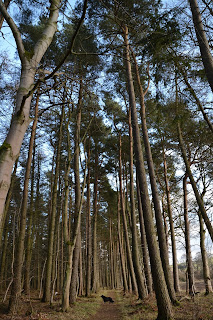
I feel that recently I have rarely seen a street and I haven't seen a street that inspired me so these photos are of the streets and paths I have been walking. And all of them have been taken with my camera phone rather than my Nikon, I think. I have been taking so many photos that I can get confused! I got myself closer to the ground for this one so I could get a greater sense of looking up. I increased the contrast and turned it infrared which made the dog stand out so much better. I loved the light shining through the trees with this one. I slightly cropped it to put my sister not so central, then I used faded black and white. I tried lots of combinations but this was the one I liked best and it is not one I would normally use. I was driving down to my parents' house and jumped out the car to snap this avenue - I loved the lines of shadow on the road. I increased contrast, lights ect - what I usually do - then this one is a brown tint. This one is a...


Comments
Post a Comment